I wrote this because I can’t settle for half truths, and it’s been burning in my heart. There must be a way to Biblically address the brokenness in families across our country. We don’t heal by cutting people off or rewriting history. We heal by facing pain honestly, forgiving without excusing, and letting Christ complete our story. The Gospel calls us to confront what is broken with truth, meet it with grace, and pursue redemption with love.
In a culture that spotlights every flaw and labels every difficulty as ‘trauma,’ it’s no surprise that recent studies show 25% of adult children are estranged from one or both parents.
Modern voices often encourage us to define ourselves by our pain, shaping our stories around wounds and the faults of others. It’s human nature to blame, and parents often become an easy target – as the ones who had the greatest influence on us. Blame can offer a sense of control, a focus for anger, and a way to explain unhappiness. Yet sometimes we forget that our parents were once children themselves – shaped by their own pasts, learning, failing, and growing even while raising us.
—Learning from Noah’s Sons—
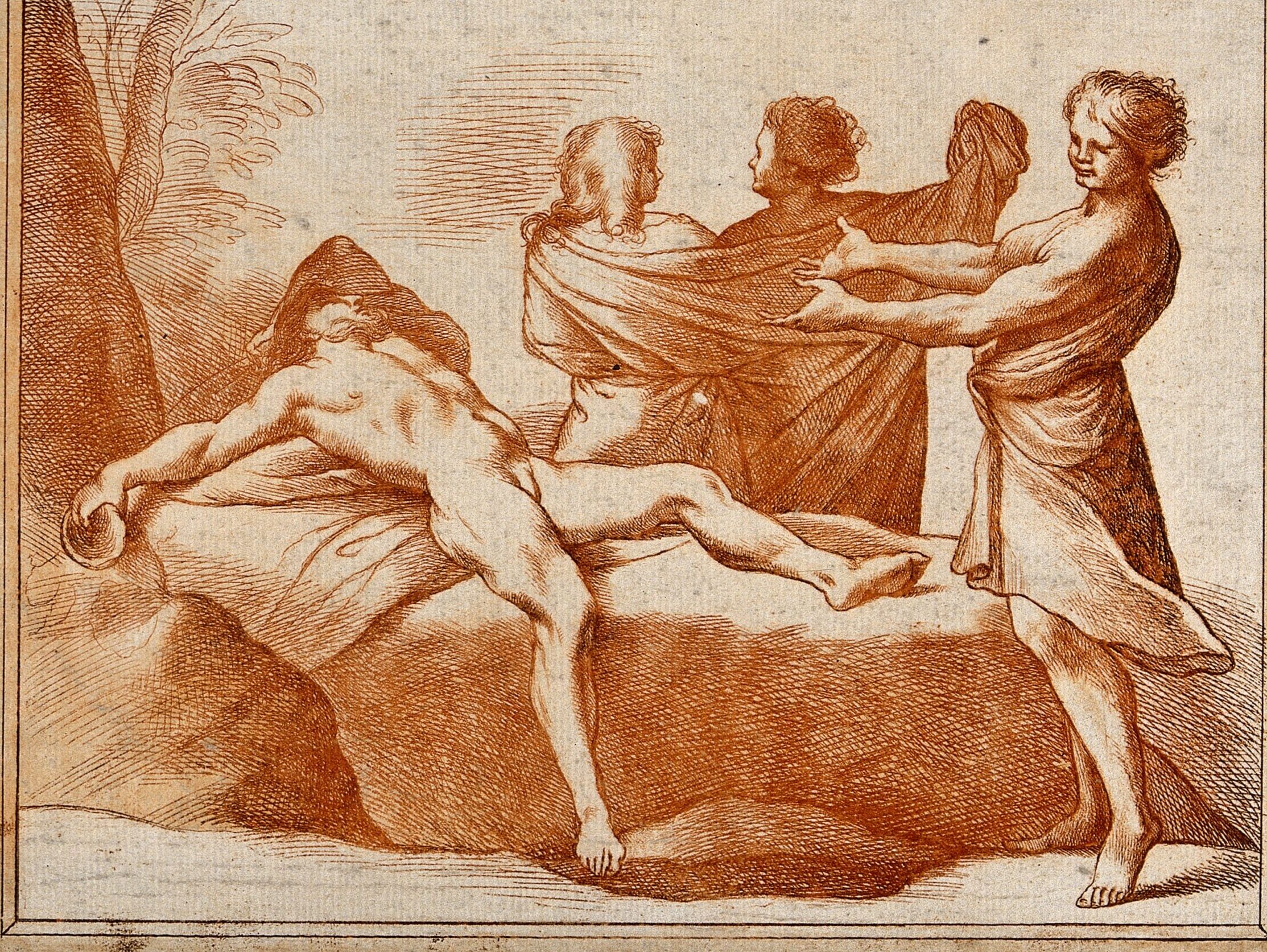
Consider the story of Noah, the preacher and ark builder. He preached righteousness despite the mockeries, witnessed miracles and heard the voice of God. When the flood is over and he gets off the boat, he decides that planting grapes, not wheat or figs, is the first order of business. I imagine there were things he wanted to forget, people he lost, and a whole world gone while he stayed afloat.
His vineyard thrived, but Noah lost all control and became drunk, fully exposed and disgraced. One son saw him like that and ran to tell the others. Perhaps it was something like, “I can’t believe Dad – what a hypocrite, I’m so done!”
But the other two sons didn’t sneak a peek, leave, or pile on with degrading words. Instead, they walked backward and covered him, restoring his dignity. Their response shaped not only their own lives but the legacy of generations to follow.
Like Noah’s sons, we too hold a garment when it comes to our parents. We can cover them, or fling the tent wide open and call it all out.
—What Society Tells Us vs. What We Need—
Our culture has strong opinions on which choice we should make:
“If they hurt you, they’re dead to you.”
“Let everyone know what they did, it’s your pain.”
“Cut off toxic people, even if it’s family.”
These phrases can feel empowering, especially when we’re bleeding inside. But sometimes what we call ‘self protection’ may simply be rationalizing selfishness. Our wounds can become torches for retribution or control, rather than pathways to healing.
I’ve found boundaries to be very helpful in my own life. But boundaries can also become rigid, abused, or an illusion – imprisoning rather than protecting us. Much of our society is growing lonely, distant, and shallow. We think we’re ‘protecting our peace,’ but perhaps what we’ve really done is placed ourselves in padded cells – ‘safe’ from everyone else, but also sealed off from the purpose of loving as we were meant to. Boundaries should arise from truth and love, honoring the Lord above all. They must coexist with bridges, reflecting God’s design for both wise stewardship of our resources and loving connection.
—Responsibilities and Growth—
Somewhere along the way, we started expecting everyone else to get everything right in their interactions with us. When someone slips, we’re quick to label and walk away. We hear things like, “You don’t owe anyone an explanation,” and on the surface, it sounds appealing. But evading every uncomfortable conversation silently sabotages our growth. We all make mistakes, myself included, and our relationships are never perfect. Avoiding discomfort may feel easier for a time, but doing so consistently weakens us and makes us sick. Just as exercising our bodies builds strength, emotional work builds resilience and character.
I want to add here that these posts aren’t aimed toward addressing physical ab*se or truly harmful situations – each story is unique, and wise discernment is so important. My purpose is simply to highlight common patterns that can keep us stuck. This subject is close to my heart because God has brought much healing in my own family, and I am deeply thankful for the opportunity to grow together with them.
—Identity, Pain, and Confiding Wisely—
Pain may be part of our stories, but it’s not meant to define us. If our identity is built on a platform of hurt, then healing can feel like self betrayal. Similarly, in relationships, if our connection with others is based largely on common wounds and negativity, we stay dependent on our pain. We struggle to move on because the relationship relies on those wounds to connect us.
We should always consider the “why” when we share our side in a story of hurt. Sometimes we process out loud because we genuinely seek healing and reconciliation. But sometimes we just want to talk about someone else to everyone else, casting ourselves as perpetual victims and elevating our woundedness in order to receive a constant inflow of sympathy.
Repeatedly seeking this kind of attention creates a dopamine-driven feedback loop: our brains crave validation, drawing us into the same behaviors and trapping us in an unchanging narrative. This doesn’t only happen in conversation – it shows up on social media too, where likes and comments provide instant gratification. Over time, it can become addictive, fueling a variety of self-destructive patterns which develop into character flaws that eventually push away quality friends.
“Who” we talk to matters also. A wise confidant can help us process – they listen well and may offer perspective we can’t see ourselves. We need humility to receive wisdom and godly counsel, even when it’s hard to hear.
—Passing on Grace—
There’s another side: when someone chooses to open their heart to us, it is not fodder for gossip or judgment, but a trust to hold. Jesus met people in their pain with great tenderness and truth. We are called to do the same. As Paul reminds us in 2 Corinthians, God comforts us in all our troubles so we can comfort others with the same comfort He gives. It does us well to deeply consider the kindness and grace we receive from our Lord so that we may pass it on.
The truths of the Gospel shape our everyday lives – they give us a new and living Way: not just a path to God, but a guide for how we live among people. They teach us to act with truth and honor, extend grace with clarity, and anchor our identity in Christ and redemption. He gives us the strength to love boldly, even through the mess of sin.
Sin is a big deal.
Jesus didn’t die to downplay it,
He died to overcome it.
That’s why grace is a big deal too.
As we look forward and work to move on, we release the past that cannot be undone. Instead, we embrace the life God has given us, stepping boldly into the freedom to grow and heal.
Many of our parents had few tools or models to guide them. They broke chains while still bleeding from those that bound them. They gave what they could – and sometimes what they couldn’t help.
Like them, we love our kids fiercely and strive to give them our best. Yet, even our best has cracks. The stories of God’s people reflect their humanity: Abraham, Sarah, Jacob, Rebekah, David. They all made choices that rippled through their families, leaving both blessings and burdens.
Here is our hope: if grace ran through their cracks, it can flow through ours too. We can forgive what our parents didn’t know, appreciate what they gave, end destructive patterns, and pass on the good we’ve learned. One day, when our own children see our flaws, we pray they too will cover us with love. Because we’re all still growing, still repenting, still fighting sin in Jesus’ name.
—The Promise Hidden in Honor—
Scripture gives both direction and hope for how to honor our parents well. ‘Honor your father and mother’ is the first commandment with a promise of blessing for a long and prosperous life. Honor becomes the bridge to healing and hope, even when our wounds run deep.
Sometimes honor means covering quietly like Noah’s sons – that’s not dismissing, it’s showing restraint.
Honor has love at its foundation. It doesn’t enable harm, sugarcoat sin, or pretend hard things never happened. It speaks truth in the context of great love and refuses to make shame a spectacle.
The truth is, we’ve all sinned far more than we know, and God is deeply merciful. Living humbly in that mercy allows us to release lesser offenses – sometimes giving them over to grace is enough.
Working through family wounds is hard, but it can become sacred ground where miracles unfold and love and grace overcome the seemingly impossible. If His grace was enough to make peace with us, it is enough for this too. Everyone who truly encountered Jesus was changed. Whether broken in body, burdened by shame, or abandoned in loneliness, He did not leave them as He found them – and He will not leave us either.
The healing we find through Christ doesn’t erase life’s scars, but it’s proof God is at work and He’s not finished.