As published by A Life Overseas
I wasn’t ready for it, that beautiful spring evening in 2016 in the mountains of Haiti, when three men burst out of the ditch with a gun and a sword. I also wasn’t ready for what came after: the years of relentless what-ifs and the way fear doesn’t always end when the danger passes.
Michael and I had only been married a year and a half, and I was five months pregnant with our first child. We had met in Haiti, married, and made our home there in a remote mountain village. We were passionate about the gospel and committed to helping people with medical needs for which there was no local care.
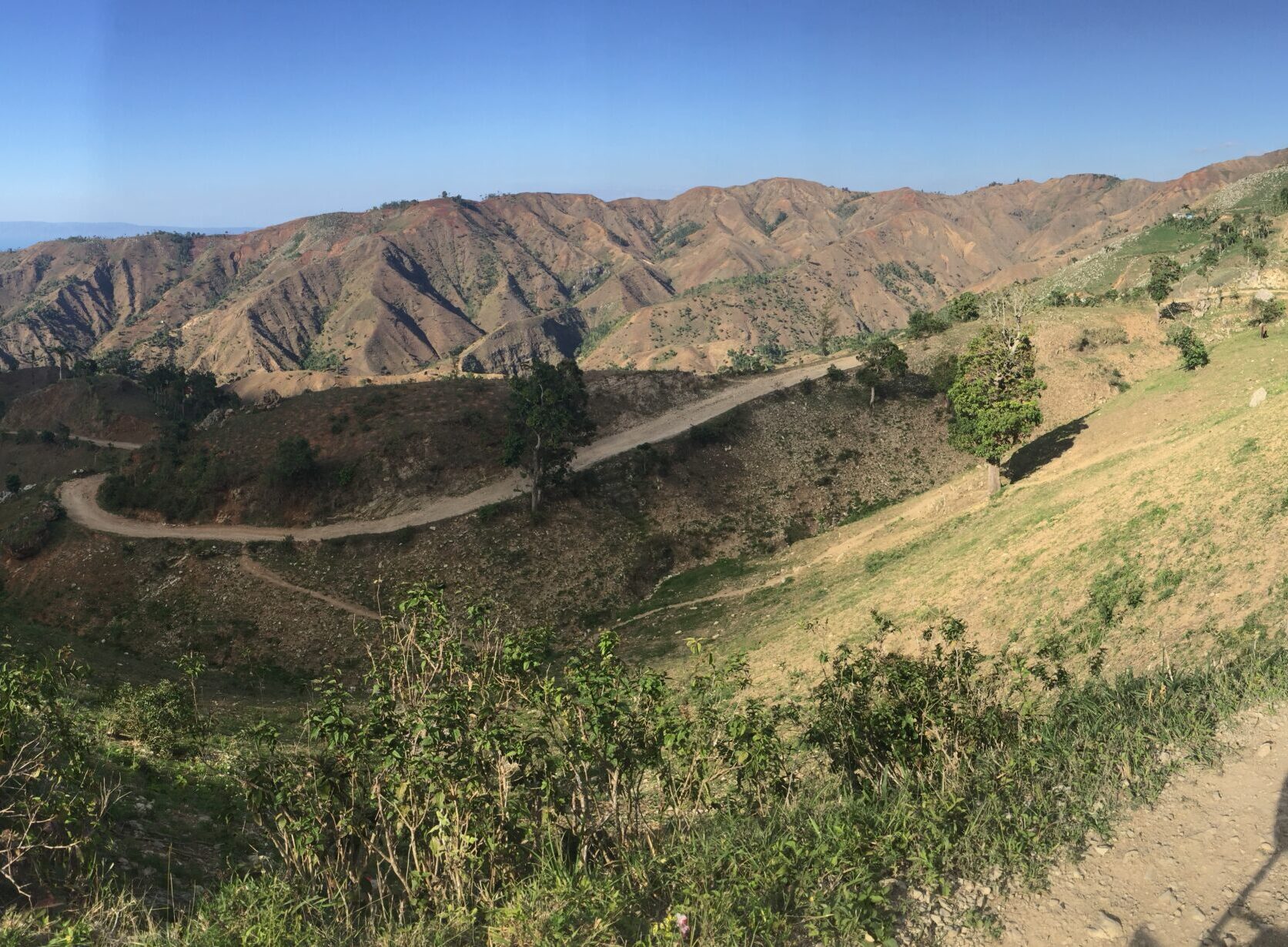
Our lives were full of work and travel. That spring evening, after preparing for a visiting team of surgeons, we stopped in town to grab supper plates before heading up the trail for home in our UTV. We drove to the first mountain crest and stopped to eat where it was cooler. The view was spectacular, overlooking the vast blue ocean and the noisy city below. We remarked that this almost felt like a date, the first we’d really had in months.
We ate quickly; dusk was falling, and we still had an hour left. The trail home stretches about twelve miles over rugged mountain terrain. We continued our journey, and as we rounded a corner, a motorcycle driver stopped and watched us pass. That wasn’t unusual, but I gasped at the evil in his eyes. I almost said something to my husband, but the UTV was loud, and I was too tired to shout.
We forded rivers and climbed ridges and eventually reached the most secluded section of the trail. Recent rains had turned it to deep mud, and our pace slowed to a crawl. As we slogged through the mud, three men shot out of the deep ditch on our left.
Immediately a gun was pressed to my husband’s head. The gunman shouted, slamming the weapon against him. Michael blocked the blows with his hands, trying to reason with the men in Creole.
On my side, two of the men approached. One held a long, dull sword. He prodded me with the blade, then began using his hands. He’s either looking for money, or I’m about to be assaulted, I thought. I shoved him away. His face twisted with rage, and he raised the sword, beating me again and again. Adrenaline is a strange thing; you don’t feel pain until you do. I bent over to shield my belly, letting the blows fall across my shoulder instead. Michael’s back was turned as he fought off his own onslaught of shouting and pistol whipping.
Soon I started to hurt. I grabbed the man’s sword and pulled. He pulled harder. I let go, and he stumbled backward. Now he was even angrier, and he unleashed his weapon on me again. Fearing Michael would rush to save me and be shot, I forced my voice to stay low and calm. “Michael, they’re hurting me.”
Michael managed to get his wallet from his pocket and called them over with an urgent voice, explaining we had only supplies in the back. I suppose they felt their intimidation had done its job. They went over the cab area, took whatever they could find: money, bags, and passports, and vanished.
In the weeks after, the weight of what happened pressed down on us. Each day brought new questions: Will it happen again? Will they come to our home? We learned that these men were part of a small gang camping out in the mountains and that the motorcycle driver I had seen likely tipped them off.
Perhaps the worst part of it all was my mind constantly playing out darker versions of what could have been. My husband could have been shot. I could have been stabbed, and my baby might not have made it. Were these fears close to reality? Maybe. I felt there was no way I could handle even one of those scenarios.
Over the next few years, the stress moved from the trail to our doorstep. While we were away, a thief broke into our home and went through everything. While home alone with our two young kids, a thief came again, once entering successfully, another time attempting it. Camera footage showed a masked man, later found watching our house with a machete hidden in his pants.
While driving to visit friends, unruly kids threw a rock at us from the embankment above the road. It struck the roll bar on the UTV with such force that it shattered — inches from our son’s head. Events like these fed my growing fears, sending my mind spinning through what could have been. I was hyper-vigilant and always on edge, checking and rechecking my surroundings.
The breaking point came in 2021 during what was supposed to be a five-week furlough in the States. Our missionary friend was killed in a plane crash. He’d been flying over the southern mountains we all crossed to avoid the gang-controlled roads. I watched his widow handle this unimaginable loss with such grace and fell apart.
This could happen to us too, and I was certain I didn’t have her level of strength to endure it. Days after that, the Haitian president was assassinated, and Haiti descended into anarchy. What was meant to be a brief furlough became an indefinite return for our family.
In the safety of the States, the tension in my mind finally began to ease. I started to recognize just how deeply fear had settled into my body and thoughts. What I would later understand was post-traumatic stress had mushroomed into anxiety and insomnia.
In missionary circles, the language of sacrifice is well known; wholeness of mind, body, and spirit is not. People asked about our work, but rarely about how we were really, truly doing. I felt pressure to remain the “heroic” version of ourselves, a projection of the unshakable missionaries portrayed in the biographies they admired.
It’s easier for most people to sanitize a story from a distance than to sit in the dusty disappointments of its reality. I remember some of the most confident “faith over fear” advice from individuals whose homes were wrapped in security systems, where an alarm would bring the police in minutes. Though they had the best intentions, and by no fault of their own, this exposed a seemingly vast disconnect.
In those moments, theology offered without empathy felt cold, and I instinctively pulled away. I had no words for what I was facing, and even less understanding of how to bring it before God without feeling like an ashamed imposter who was failing at faith.
Only gradually did I come to understand that I had never brought my pain and worry into the light of God’s truth. I had been trying to build a life in the gap between them, keeping my suffering and faith separate. In doing so, I had overlooked something so simple: God does not give imaginary grace for imaginary things.
I realized I was putting myself through ‘simulated suffering,’ trying to summon the strength to survive a murder, a plane crash, or a loss that hadn’t happened. I felt weak because I was trying to carry a burden God had neither placed on my shoulders nor given me strength to bear.
I think this is more common than we admit — many of us do this with finances, health, politics, and relationships. We rehearse disasters that haven’t even happened to steel ourselves against losses we haven’t actually faced. As a thinker and organized planner, some of my greatest giftings and strengths became weaknesses when driven by fear and worry.
Trusting God’s sovereignty over what does not happen takes a different kind of discipline. It requires believing that, despite our vivid imaginations, He remains the gatekeeper of our lives. The Lord governs over all that comes to pass and shields us from the countless tragedies that do not. I had somewhat viewed God’s sovereignty as passive, as if He simply stepped back and let Haiti’s chaos engulf us and our friends. But even the boundaries around our suffering are as much under His control as the circumstances He allowed, just as God set limits that Satan could not cross in Job’s life.
As we pray about whether God will lead us back to Haiti, I still struggle. Part of working through that has been writing this. I am reminded of “bringing every thought into captivity to the obedience of Christ” (2 Cor. 10:5). This isn’t a passive “letting go”; it is an aggressive arrest of the mind. Obedience often leads straight through our deepest wounds and fears.
When my mind begins to unravel, I now ask: Has God given me grace for this yet? The answer is always no, of course not, because it hasn’t happened. And that “no” is a gift. It turns my heart from worry toward deep thankfulness.
Perhaps God will one day lead our family through what I fear the most. I may wonder if I have the faith for that journey, but I now understand that burden is not mine to bear — it belongs to God. The unknown ahead isn’t a dark void, it is territory already claimed by the light of His presence.
While I don’t yet have the grace for tomorrow, I do have exactly enough for this breath, this prayer, this step. And maybe, if you are walking through fear or uncertainty too, this can serve as the reminder we both need: His grace is enough for the road we are actually on.