An Imaginative Retelling of John 8:1-11
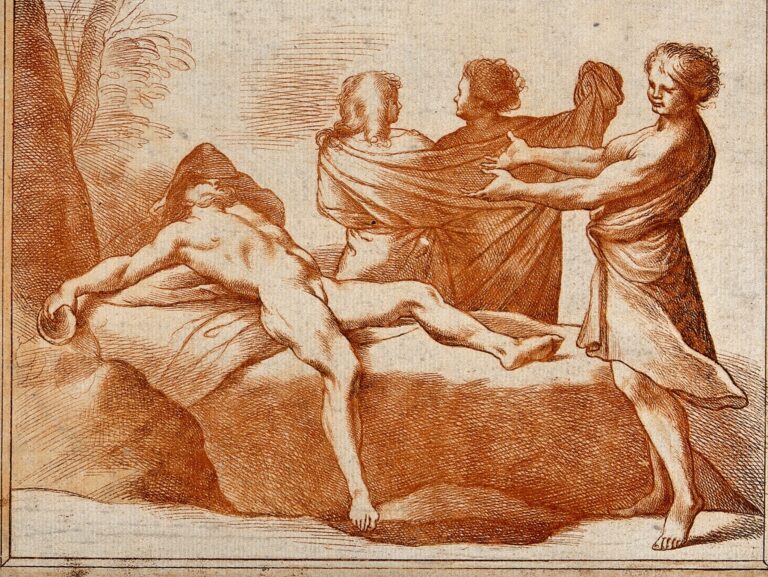
There the woman stood trembling, her heart pounding loudly, each beat echoing her fear and shame, drowning out the angry whispers of the crowd surrounding her. Humiliation weighed down like a heavy cloak, suffocating her with every breath. Caught in the act of sin, they had dragged her here, but her desperate apologies and cries for mercy fell on deaf ears. The whispers escalated into angry murmurs as the crowd pressed in closer, hundreds of fingers pointed at her, faces she had known all her life now glaring with contempt.
Some of her friends were already reaching down, fingers curling around jagged rocks. Disgust twisted their faces—the same hands that once embraced her were now eager to pass judgment. “You are such a hypocrite!” they hissed.
She noticed a couple of influential figures from the marketplace, situating themselves high on platforms as they proclaimed, “It is our duty to expose such sin for the sake of the faithful. This is a prime example of moral decay, and we must uphold the Law without compromise…” It was obvious they were relishing the opportunity for attention as their words further stoked the outrage.
She glanced at her parents off to the side; their faces were flush with embarrassment. They shook their heads, insisting emphatically, “We certainly raised her to know better!”
Not far from them stood her husband; she caught his eye, hoping for a glimpse of comfort, but all she saw was hurt and anger etched on his face. “You deserve every bit of this,” he mouthed, his words piercing through her heart like a dagger.
The woman wanted to disappear, to melt into the dust beneath her feet. She recalled the times when she had stood amongst the crowd, hurling stones at others who had been condemned. She had made a point of ensuring that everyone knew her devotion to the Law was unwavering and that she did not condone such sinful individuals. How had she fallen so far? Mentally, she retraced the series of lies she had told herself, the lines she had crossed while convincing herself it was acceptable. Now, as she faced her own execution, she knew there would be no mercy for her blatant transgressions.
Wait—what was she hearing? The harsh voices of the crowd quieted, and everyone was focused on the exchange between her accusers and the One they referred to as Teacher. Why were they prolonging her agony? Quiet murmurs reached her ears—the Teacher’s name was Jesus, and some were whispering that He was Christ, the Messiah. If He truly were the awaited Messiah, perhaps He would seize this moment to initiate the punishment that would seal her fate. She braced herself for deeper disgrace, envisioning the most righteous Jew of all stepping onto a platform to publicly condemn her as a warning and example for everyone.
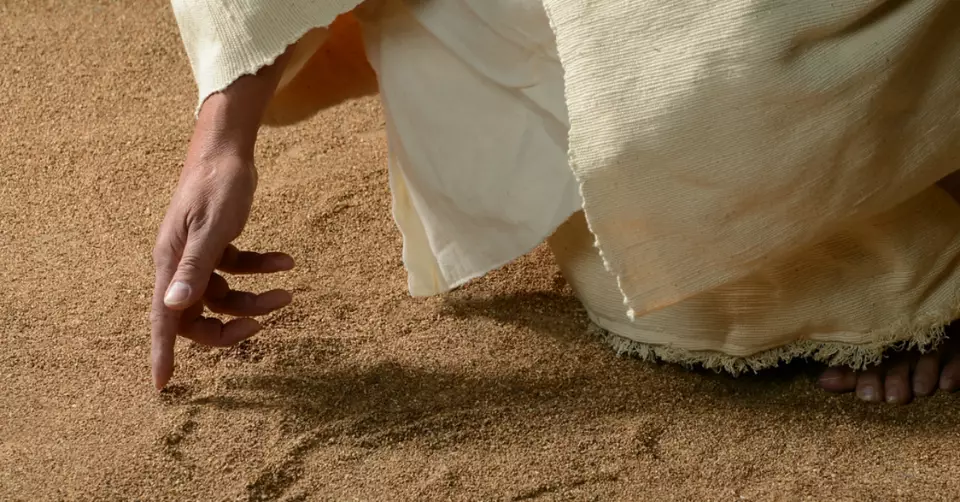
Suddenly, Jesus stopped speaking and bent down, writing something in the dirt that she couldn’t quite make out. She could hardly believe that someone of such honor would lower Himself like this for so long. Glancing around, she noticed the astonishment on everyone’s faces as they intently watched His hand swirling through the earth. His finger was now covered in dirt, but what shocked her most was that it wasn’t pointing at her.
The religious leaders pressed Jesus, relentlessly questioning Him as He wrote in silence, demanding to know His views on the situation. Finally, He stood, briefly, and said, “Let him who is without sin among you be the first to throw a stone at her.” He went back to writing.
Everyone stared, struggling to grasp His response. A few of the oldest quietly turned and walked away. As the others remained, their own sin began to surface in their minds. How dare He redirect this to them? But one by one, more began to slip away. Those who stayed felt the unbearable weight of their hypocrisy. Confronted with the truth of their own failings, they could no longer hide behind the facade of moral superiority. It was as if a supernatural light laid bare every hidden transgression, and, unable to bear the revelation, they all soon dropped their stones and left.
Confusion and relief washed over her. What was happening? As Jesus stood again, He asked, “Where are they? Has no one condemned you?” It was then that she realized she was free to go. Free to begin again, perhaps? She could hardly dare to hope. She swallowed hard, tears welling in her eyes. “No one, Lord,” she replied, her voice hoarse from hours of weeping.
“Neither do I condemn you,” He said, His voice gentle and His eyes filled with love.
His tender words washed over her bleeding heart like a flood. The pain and brokenness that consumed her began to dissolve, replaced by an unexplainable healing. She had never experienced such a radical, forgiving kindness.
Eventually, this forgiven woman would come to understand that this gentle Healer would soon bear the full weight of God’s wrath for her sins on a bloody cross. The very fingers that had once inscribed the Ten Commandments on stone were the same ones that wrote in the dirt, sparing her from being stoned.
A Few Thoughts on This Narrative:
For as long as I can remember, I’ve wondered what Jesus wrote in the dirt. I always thought John, the writer, left out a crucial detail. What did Jesus write on the ground?
I’ve come to realize that what Jesus wrote is not so very important for us to know. John was largely focused on the posture of Christ. Jesus, the perfect Son of God and Creator of the universe, humbled Himself, bent low and got His hands dirty once again.
When they brought the woman before Jesus, He could have used the opportunity to deliver a powerful speech on the evil and consequences of sin. But these were religious people—they already knew all that, her transgression wasn’t being called into question. What they didn’t understand, however, was grace. In the midst of this outrageous scandal, Jesus gently redirected their focus inward, compelling them to confront the truth of their own sanctimonious hearts.
Today, we do not stone people—such a brutal and unforgiving form of judgment is behind us, thanks to the precious work of Christ. Yet I wonder if sometimes our hearts are not so different from those who once clutched sharp stones and pointed accusing fingers.
I wonder if the ‘stones’ we pick up today are actually sharp words aimed at wounding others.
Or perhaps our ‘pointing fingers’ take the form of typing hurtful comments and publicly shaming those we criticize.
I wonder if an impulse to gossip and ‘spill the tea’ sometimes reflect a desire to display spiritual superiority and feed our self-righteous egos.
It’s good to consider:
Am I in the crowd, demanding retribution when others have sinned or offended me?
Maybe I identify with the woman at the center—guilty, broken, and ashamed —wondering if grace could ever reach me?
Perhaps the love of this humble Christ has changed your life. You have already stood before Him alone, guilty, yet you have experienced His grace and kindness, transforming your shame into purpose and your brokenness into hope as a beloved child of God. As you imitate His life, perhaps you have intimately experienced what it means to extend love and mercy to someone who has deeply hurt you. Or maybe you have felt the pressure and judgment from the “religious” when you take the hand of a fellow sinner to seek the grace and truth of Christ together.
No matter where you are in your journey, take heart that our humble Lord extends not a warning, but a grand invitation—an offer of amazing grace and renewed purpose: ‘Go and sin no more’. I love this quote by John Piper: “The secret of being kind and tenderhearted and forgiving is being amazed that you are a forgiven sinner”.